
Harshit Rana’s Surprise Inclusion Reshapes India’s Strategy for the 3rd ODI Against Afghanistan
The ongoing cricket series between India and Afghanistan has provided no shortage of high-octane drama, tactical experimentation, and individual brilliance. With India holding an unassailable 2-0 lead in the three-match One Day International (ODI) series, the final encounter at the historic M.A. Chidambaram Stadium in Chennai initially promised to be a textbook “dead rubber.” However, the Board of Control for Cricket in India (BCCI) and the national selection committee injected a massive dose of intrigue into the fixture by announcing the surprise addition of fast bowler Harshit Rana to the squad.
Rana’s sudden inclusion is far more than a routine squad update. It represents a crucial step in India’s long-term fast-bowling management, a heartwarming story of resilience after a grueling injury layoff, and a fascinating look into how team management intends to utilize dead rubbers to build bench strength.
The Road Back: Overcoming the Knee Injury
To truly appreciate the significance of Harshit Rana’s return to the national setup, one must look back at the heartbreak that defined his early 2026 season. Ahead of the T20 World Cup 2026, Rana was widely considered one of the X-factors in India’s white-ball plans. His ability to hit the deck hard, crank up speeds north of 140 km/h, and deceive batters with a well-disguised slower ball made him an invaluable asset.
However, disaster struck during a warm-up game against South Africa in Mumbai. A severe knee injury not only ruled him out of the T20 World Cup—where India ultimately lifted the trophy after defeating New Zealand—but also forced him to sit out the entire Indian Premier League (IPL) 2026 season for the Kolkata Knight Riders (KKR).
For a young fast bowler on the rise, missing out on back-to-back marquee tournaments can be mentally and physically devastating. Rana spent months out of the public eye, grinding through a rigorous rehabilitation program at the BCCI Centre of Excellence (CoE).
The Medical Clearance
According to official communications from BCCI Secretary Devajit Saikia, Rana successfully completed his rehabilitation program, passing all fitness and workloads tests with flying colors. Rather than making him wait for domestic tournaments to prove his match fitness, the team management fast-tracked him into the squad in Chennai. This move indicates just how highly valued Rana is within the national framework.
Tactical Analysis: Why Chennai is the Perfect Testing Ground
The M.A. Chidambaram Stadium, affectionately known as Chepauk, is historically renowned for its spin-friendly tracks. On the surface, introducing a hit-the-deck fast bowler into a spin haven might seem counterintuitive. However, modern ODI cricket demands versatility, and Chennai provides a unique set of challenges that will test Rana’s tactical acumen.
1. Mastering the Variations
On a pitch that offers grip and slowness, Rana’s cutter variations and back-of-the-hand slower balls will be put to the test. If he can adapt his lengths to exploit the friction of the Chepauk surface, it will add a vital dimension to his bowling arsenal.
2. The Heavy Ball in the Middle Overs
With regular frontline pacers occasionally rested during long seasons, India has been searching for a bowler who can break partnerships in the middle overs (overs 11–40). Rana’s natural back-of-a-length trajectory allows him to extract uncomfortable bounce even from docile tracks, making him an ideal candidate to disrupt Afghanistan’s gritty middle-order batters.

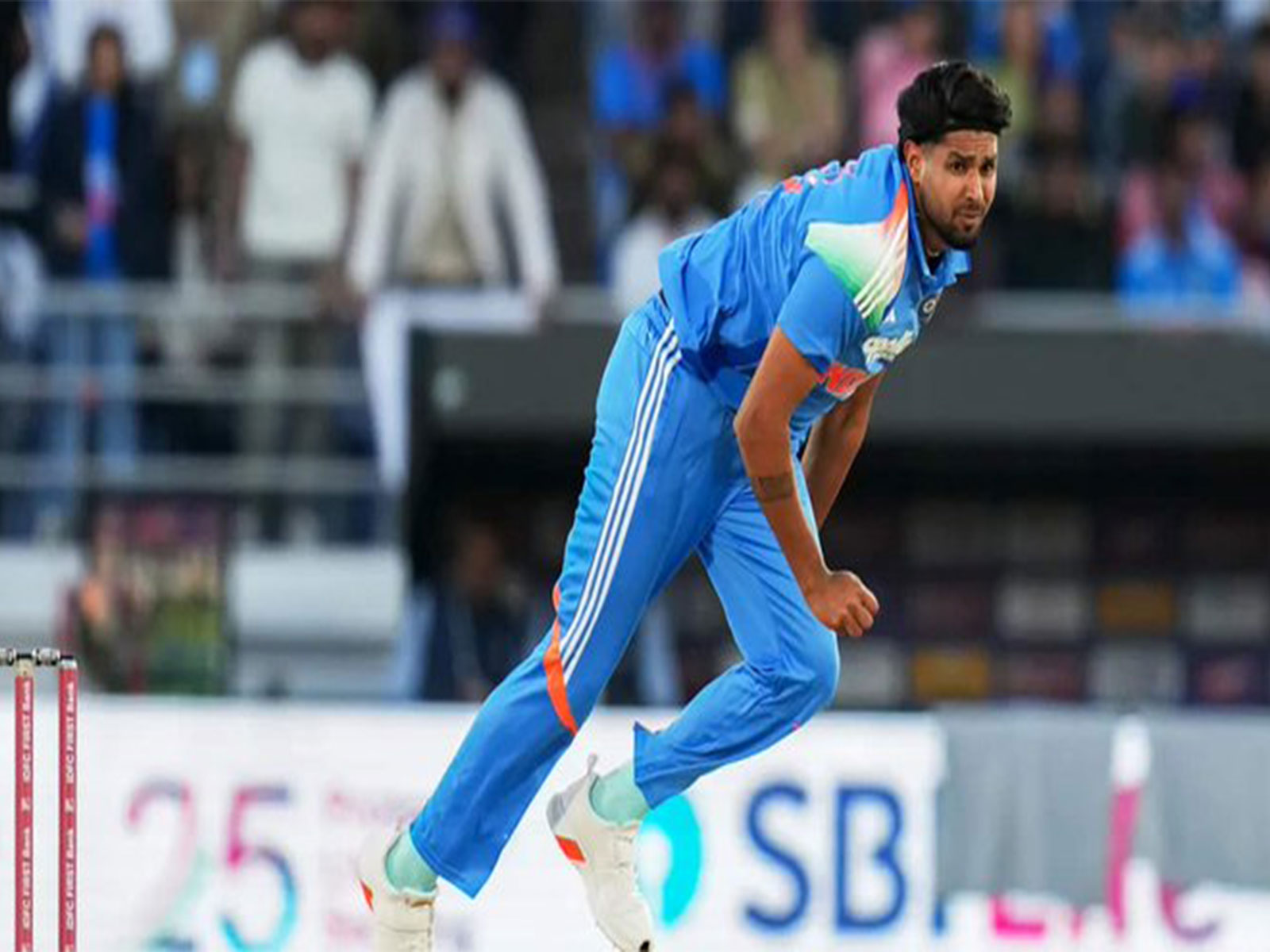
India’s Dominance in the Series So Far
While Rana’s inclusion steals the headlines, it is worth contextualizing how comfortably India has navigated this series against a highly competitive Afghanistan side.
| Match | Venue | India’s Performance | Afghanistan’s Performance | Result |
| 1st ODI | Dharamshala | 195/3 (22.5 overs) | 194 (24.5 overs) | India won by 7 wickets |
| 2nd ODI | Lucknow | 402 (49.5 overs) | 232 (44.3 overs) | India won by 170 runs |
| 3rd ODI | Chennai | Upcoming (June 20) | Upcoming (June 20) | TBD |
In the first ODI at Dharamshala, the bowlers exploited the early moisture, rolling Afghanistan over for a sub-200 score before the top order chased it down with clinical ease. The second ODI in Lucknow saw a completely different beast, as India piled on a massive 402 runs, highlighted by captain Shubman Gill’s blistering 154. Afghanistan’s chase collapsed under the scoreboard pressure and disciplined bowling.
With the series already secured, the team management has the luxury to experiment. Inserting Rana into the playing XI allows India to rest a senior bowler, ensuring asset preservation while simultaneously testing a returning weapon in a low-stakes international environment.
The Strategic Big Picture: Tours of Ireland and England
The timing of Rana’s return is meticulously planned. The BCCI has already confirmed that the 24-year-old speedster is included in the upcoming squads for the bilateral tours of Ireland and England, where India is scheduled to play a combined seven T20Is alongside other formats.
The management understands that throwing a bowler straight into the swinging, seam-friendly conditions of England or the brisk environments of Ireland without match practice is a recipe for injury recurrence or loss of confidence. The 3rd ODI against Afghanistan serves as a crucial cushion. It gives Rana the opportunity to:
- Find his bowling rhythm in a live international match.
- Test his knee under the intense fielding pressures of a 50-over game.
- Re-align with the tactical blueprints laid out by the coaching staff.

Updated Indian Squad Dynamics
The addition of Rana alters the balance of the current squad. Led by the young and dynamic Shubman Gill, the team is a potent mix of veteran stability and youthful exuberance.
India Squad for the 3rd ODI:
Shubman Gill (c), Rohit Sharma, Shreyas Iyer (vc), KL Rahul (wk), Ishan Kishan (wk), Nitish Kumar Reddy, Washington Sundar, Kuldeep Yadav, Arshdeep Singh, Prasidh Krishna, Prince Yadav, Gurnoor Brar, Harsh Dubey, Yashasvi Jaiswal, Harshit Rana.
Key Player Visual Watch
With white-ball stalwarts like Rohit Sharma providing invaluable on-field mentorship, young fast bowlers like Arshdeep Singh, Prasidh Krishna, and now Harshit Rana have an ideal ecosystem to thrive. The competition for the secondary and tertiary pacer slots in India’s preferred XI is fierce, and Rana’s return officially blows the race wide open.
What to Expect from Afghanistan in the 3rd ODI
Despite trailing 2-0, Afghanistan remains a dangerous unit that cannot be taken lightly. Their pride will be on the line in Chennai, a venue that matches the strengths of their world-class spin attack. Players like Rashid Khan and Mujeeb Ur Rahman will view the Chepauk track as a golden opportunity to sign off from the series on a high note.
For Harshit Rana, bowling against an aggressive top order consisting of Rahmanullah Gurbaz and Ibrahim Zadran will be an excellent test. The Afghan batters are known for using their feet and targeting short boundaries; if Rana can counter their aggression with raw pace and precise execution, it will send a clear message to selectors that he hasn’t lost a step during his injury hiatus.
Conclusion: A Dead Rubber with Alive Stakes
In contemporary international cricket, true “dead rubbers” no longer exist. Every match carries ranking points, psychological weight, and opportunities for individual redemption. The 3rd ODI between India and Afghanistan in Chennai is the perfect manifestation of this reality.
All eyes will be trained on the bowling run-up, watching for the moment Harshit Rana streams in to bowl his first ball in international cricket after months of physical rehab and mental fortitude. For India, it is a chance to complete a clean sweep and fine-tune their bench. For Rana, it is the official end of a dark chapter and the beginning of what promises to be a stellar international comeback.