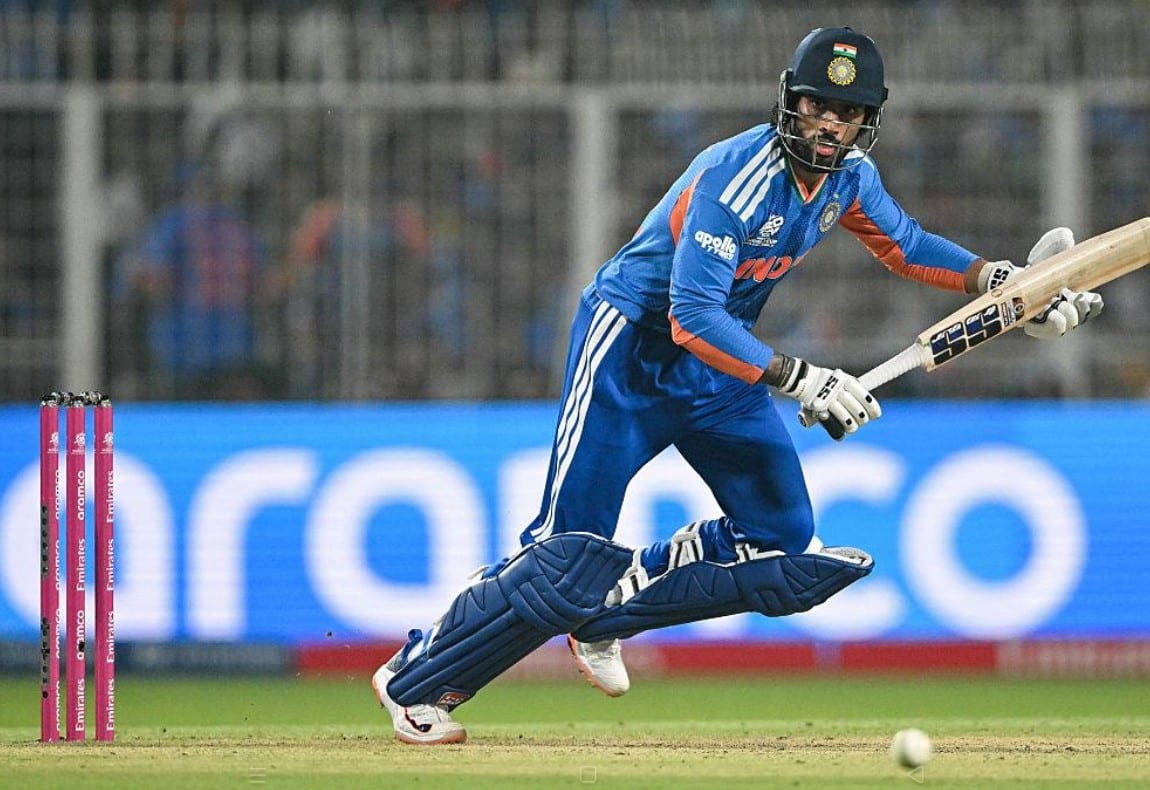
Cricket has a peculiar way of punishing complacency. One minute a side appears firmly in control; the next, a sequence of poor decisions can turn dominance into complete damage. India’s collapse from 115/1 to 223 all out raises a crucial question– When does aggresive intent stop being an advantage and start becoming a liability?
The illusion of Control: When a strong start becomes a false sense of security.
In T20 cricket, a rapid start can create the impression that a batting side has complete control over the game. However, a high scoring rate does not necessarily mean that the innings is structurally secure. India’s progress to 115/1 in just 8.2 overs demonstrated their attacking dominance, but the challenge was to convert that momentum into a total built on calculated decisions rather than uninterrupted aggression. At first, Abhishek Sharma starts accelerating the score with 69 runs on 30 balls along with Ishan Kishan (37 runs on 18 balls) causing the pressure to ease temporarily and the team started relying more on these two.
The Mathematics of Momentum: How Wickets Change a Batting Side’s Risk Profile?
Momentum in cricket is often measured through runs and boundaries, but wickets are equally important to understanding an innings. Every dismissal changes the balance between scoring quickly and preserving batting resources. When wickets begin to fall in quick succession, the incoming batters must reassess their approach, because the risks that seemed reasonable during a strong start may become costly during a collapse. The collapse here started from Shreyas Iyer and then the collapse happened like Cards. That collapse had mixed reasons- Relying on few and over security of the run
The Cost of Communication
In high-pressure T20 cricket, even a brief miscommunication can prove costly. A single run-out can break a partnership and shift the pressure onto the remaining batters. We saw this happen between Tilak Verma and Axar Patel. The dismissal happened in a rather unusual and lazy manner. Axar Patel hit a delivery from Gudakesh Motie towards the boundary, and both batsmen assumed it was going to be a clean four. Believing the ball had already crossed the rope, Tilak Varma started walking casually outside his crease.
Then because of this lack of communication, West Indies fielder Kamil Pooran made a brilliant diving stop at the boundary ropes to pull the ball back. He quickly threw it back to wicketkeeper Shai Hope, who collected it and whipped off the bails at the non-striker’s end, catching Tilak Varma completely off guard and well short of his crease.
Aggression vs Execution
Nowadays, we see aggression taking over execution between the rising cricketers. There’s no such thing as “plan” or “slow play”. Agression is fascinating but over consuming will take you to a moment where you can’t do anything in defence and the final decision is OUT. Aggression is interesting but for a short period, while execution is the key to long game or called “safe play”.
Ultimately, a strong start can set the foundation for victory, but only discipline, intelligent risk assessment and composure under pressure can protect it. In cricket, momentum may build an innings, but the ability to manage it determines how far that innings goes.