Introduction : Powerplay vs Death overs
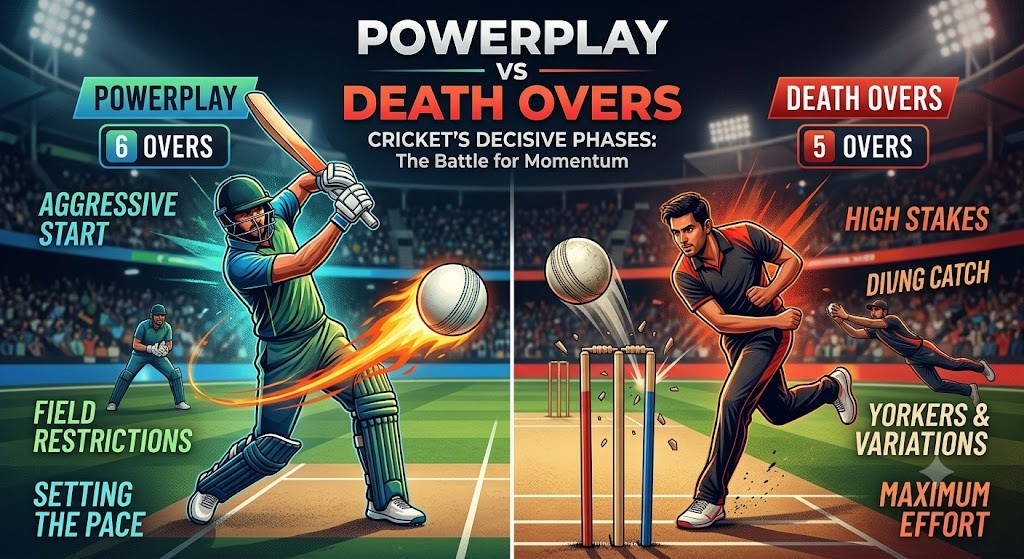
Six overs to attack. Five overs to finish. And for bowlers, eleven overs where one mistake can change everything. Powerplay and death overs are where cricket’s biggest battles between bat and ball unfold — and often, where matches are won.The moment the first ball is bowled, the battle begins-but the first six overs often set the tone for everything that follows.
• Easy Boundary Hitting: Batters can clear the inner circle easily to score boundaries without risking catches in the deep.
• Setting Match Momentum: High scoring rates early on shift psychological pressure on the opposition immediately.
• Early Breakthrough: For the bowlers, the hard ball generates swing and seam movement, helping them dismiss key-top batters early.
• Stifling the Middle order: Taking early wickets forces incoming batters to play defensively to rebuild the innings.
But as the innings enters its final stretch, the rules of the battle change. The field spreads, the pressure rises, and suddenly every delivery matters. Welcome to the death overs. For batters, it is the time to unleash every boundary option they have. For bowlers, it is a test of execution, variation and nerve.
• Capitalizing on Tired Bowlers: One of the most powerful trick of the batter in the Death-overs is to attack the tired and stressed bowlers.
• Maximum Scoring Acceleration: Batters take ultimate risks to maximize the score, since preserving remaining wickets is no longer a priority.
• And when Batters hit almost every ball in the air, defensive boundary riders have regular catch opportunity leading to guaranteed wicket opportunities.
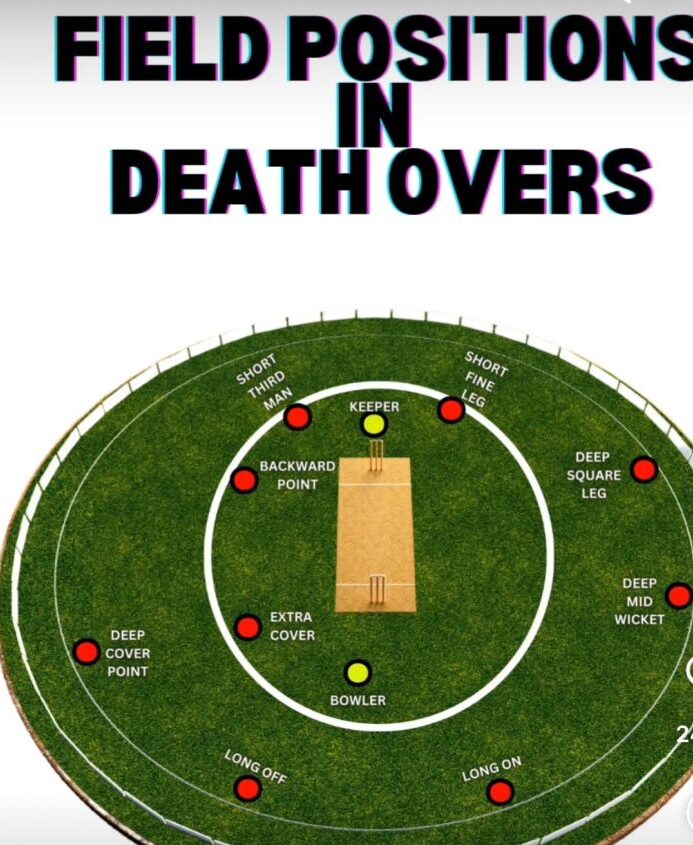
• Innings Containment: Executing a strong defensive bowling plan in this phase can starve the batting team of a big finish and alter match momentum.
The powerplay starts the battle, the death overs finish it and in between, a match can change its entire course.
Conclusion
The Powerplay and the Death Overs represent the two defining extremes of a cricket match—the explosive opening act and the high-stakes final finish. While the Powerplay sets the structural foundation and aggressive momentum, the Death Overs test pure execution under extreme pressure. Matches are rarely won in the middle overs alone; it is in these two critical eleven-over phases where momentum shifts, strategic execution matters most, and ultimate victories are decided.
Frequently Asked Questions (FAQ): Powerplay vs. Death Overs
What is the Powerplay in T20 cricket?
The Powerplay refers to the first 6 overs of a T20 innings. During this phase, only 2 fielders are allowed outside the 30-yard inner circle, allowing batters to hit over the infield with lower risk.
What are the Death Overs?
The Death Overs are the final 5 overs of an innings (overs 16 to 20 in T20s). In this phase, batters attempt high-risk, high-reward shots to maximize run accumulation regardless of wicket loss.
Why is the Powerplay so critical for setting match momentum?
A strong Powerplay allows the batting team to post a high run rate early on, forcing the bowling side to play defensively. For bowlers, picking up early wickets during this phase exposes the middle order before they can settle.
How do tactical strategies differ between Powerplay and Death Overs?
- Powerplay: Batters target clearing the infield; bowlers rely on seam, swing, and line-and-length to pick up early breakthroughs.
- Death Overs: Batters attack tired bowlers and target all boundary areas; bowlers rely on variations (yorkers, slower balls, wide lines) to restrict scoring and generate catches in the deep.
Why do Death Overs produce frequent wickets?
Because batters take extreme risks to score rapidly near the end of an innings, defensive boundary riders frequently get catching opportunities.